
How I Regulated My Nervous System (What Actually Worked)
For about two years, "fine" was my default answer. I was not fine. My heart rate sat high through ordinary Tuesdays, I flinched at notification sounds, and I could not remember the last time I felt fully at rest — not asleep, not distracted, just settled. Here's what actually moved the needle, in the order it happened.
The thing that had to happen first: naming it correctly
I spent a long time treating this as an anxiety-thoughts problem — more journalling, more reframing. It helped a little. What changed things was realising it was also a body problem: my nervous system was stuck in a sympathetic (fight-or-flight) state, and no amount of thinking my way to calm was going to out-argue a physiological alarm. That's when I started reading about polyvagal theory — not as a cure-all, but as a map of what was actually happening.
What didn't work (at least not alone)
- Being told to "just relax." You cannot instruct a nervous system in fight-or-flight to stand down. It doesn't take orders from the part of your brain that talks.
- Meditation, cold, on a bad day. Sitting still with a racing system sometimes made the racing louder. Some regulation techniques need a baseline of safety to work — they're not universal.
- Waiting for a good week to start. There is no good week to start. The bad weeks are the ones that need it.
What actually worked
The breath, before anything else. A longer exhale than inhale — in for four, out for six to eight — is one of the few things that reliably nudges the vagus nerve toward the "rest and digest" side. I do this before I do anything else on a bad day, six rounds, nothing fancier than that.
Naming the state out loud, or on paper. "I'm activated right now" sounds almost silly written down. Said honestly, it does something — it moves the experience from a formless flood into a specific, nameable thing your prefrontal cortex can actually work with.
Discharging the energy, physically. Fight-or-flight mobilises real energy for real movement that, in modern life, almost never happens. A hard minute of shaking out my hands and legs, or pushing against a wall, sounds strange and helps more than it should. The energy has somewhere to go.
Orienting to the room. Naming five things I can see, four I can hear, feet flat on the floor. It sounds like a worksheet cliché because it's genuinely effective — it gives your system present-tense evidence that this is a room, not an emergency.
Co-regulation, deliberately. A steady voice on the phone, a hand on my shoulder, a dog leaning against my leg — a regulated nervous system nearby is one of the fastest ways to borrow calm before you can generate your own. I stopped treating this as weakness and started treating it as a tool.
What I'd tell someone starting today
Don't try to fix the whole system in one sitting. Pick one tool — the breath is the easiest entry point — and run it the next time you notice the activation rising, not after it's already peaked. Repetition is what teaches your nervous system a new, faster route back to safety. It took me months of small reps, not one big insight.
Where a workbook fits
Eventually I wrote the sequence down so I wasn't reinventing it under stress — see the state, exhale long, touch base, discharge, look for safe, ease back in. That became the SETTLE Method, and it's the spine of the workbook we built.

The Nervous System Regulation Workbook
A calm, body-based 46-page printable workbook built around the SETTLE Method — for when you're wired, braced, and exhausted but can't seem to settle.
View the workbook
10 Simple Ways to Reset and Regulate Your Nervous System
Small, evidence-informed resets you can use in under two minutes — grounded in polyvagal theory and vagal-tone research, not vibes.

How to Set a Boundary Without the Guilt Spiral
People-pleasing isn't kindness — it's a fear response. Here's why the guilt after saying no is temporary, and a five-step method for holding a boundary and the relationship at the same time.
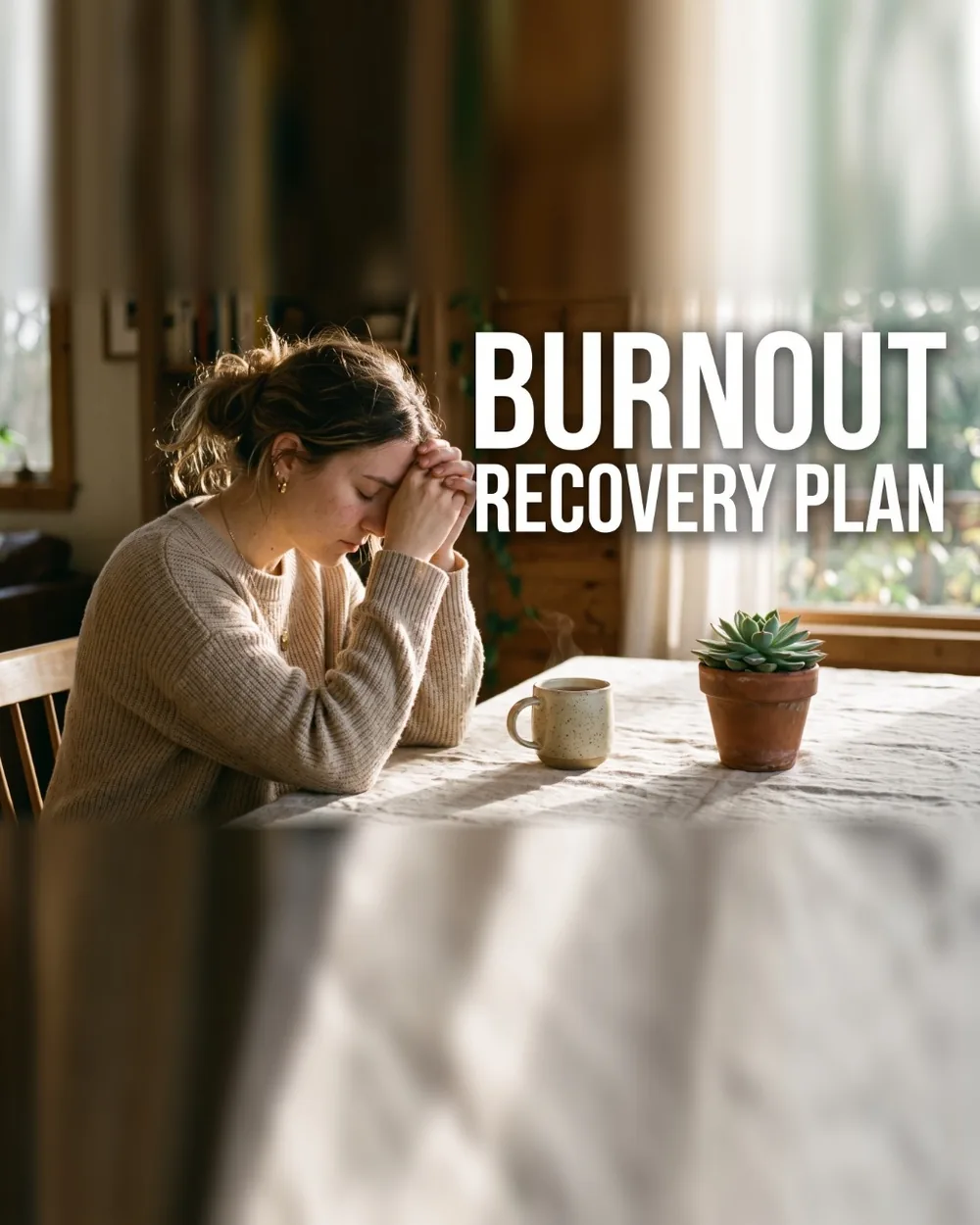
You're Not Lazy, You're Burned Out — Here's the Difference
Burnout doesn't usually look like collapse. It looks like a high performer who quietly stopped caring the way they used to. Here's how to tell the difference, and where to actually start.