
How to Set a Boundary Without the Guilt Spiral
You said no. It was a reasonable no. And now you feel like you've done something wrong — you're rehearsing an apology, checking your phone for their reaction, half-planning to walk it back. The boundary was fine. The guilt afterward is the part that keeps you stuck.
People-pleasing is a fear response, not a personality
Chronic people-pleasing usually isn't generosity. It's a learned strategy for staying safe: if everyone around you is comfortable, no one is upset with you, and if no one is upset with you, you're okay. It often traces back to an environment where someone's mood was unpredictable and managing it was your job.
That strategy worked once. As an adult it costs you a lot — your time, your energy, and a low simmer of resentment toward the people you keep saying yes to.
The guilt is real, but it's information, not instruction
When you hold a boundary, you will feel a spike of guilt. That's expected. Your nervous system learned that disappointing someone is dangerous, and it's sounding the alarm. But the guilt is a feeling about an old rule, not evidence that you've done harm.
The key move is to let the guilt rise and pass without acting on it — without the apology text, the over-explanation, the "actually, never mind." Guilt that isn't fed fades on its own, usually faster than you expect. Every time you let it pass, the alarm gets a little quieter.
A method for the moment someone asks
Boundaries fail in the two seconds between the request and your answer. A short sequence gives you something to do in that gap:
- Watch for the pull. Notice the automatic yes forming — the flush, the urge to smooth things over. Naming it buys you a beat.
- Own the fear under the no. What are you actually afraid will happen if you decline? Said plainly, it usually shrinks.
- Reply with one honest sentence. "I can't take that on right now." No stacked reasons, no apology padding. Extra justification invites negotiation.
- Tolerate the pause. Let the guilt spike and pass. Don't fill the silence.
- Hold the line, not your breath. You can keep the relationship and the boundary. Warmth and a no are not mutually exclusive.
Start small
Practise on low-stakes boundaries first — the extra task at work, the plan you don't want to make. The last person you practise on is a parent. Each rep teaches your system that a boundary is survivable, and the guilt gets less loud every time.
Where a workbook fits
A workbook won't have the conversation for you, but it makes the reps easier: the method is written out, there's a script bank for the hard asks, a resentment audit to show you where your missing boundaries are, and a guilt timeline so you can watch the feeling fade in real time. That's what ours is built to do.

The People-Pleaser's Boundary Workbook
A calm, CBT-informed 40-page printable workbook built around the WORTH Method — for people who over-apologise, over-explain, and say yes when they mean no.
View the workbook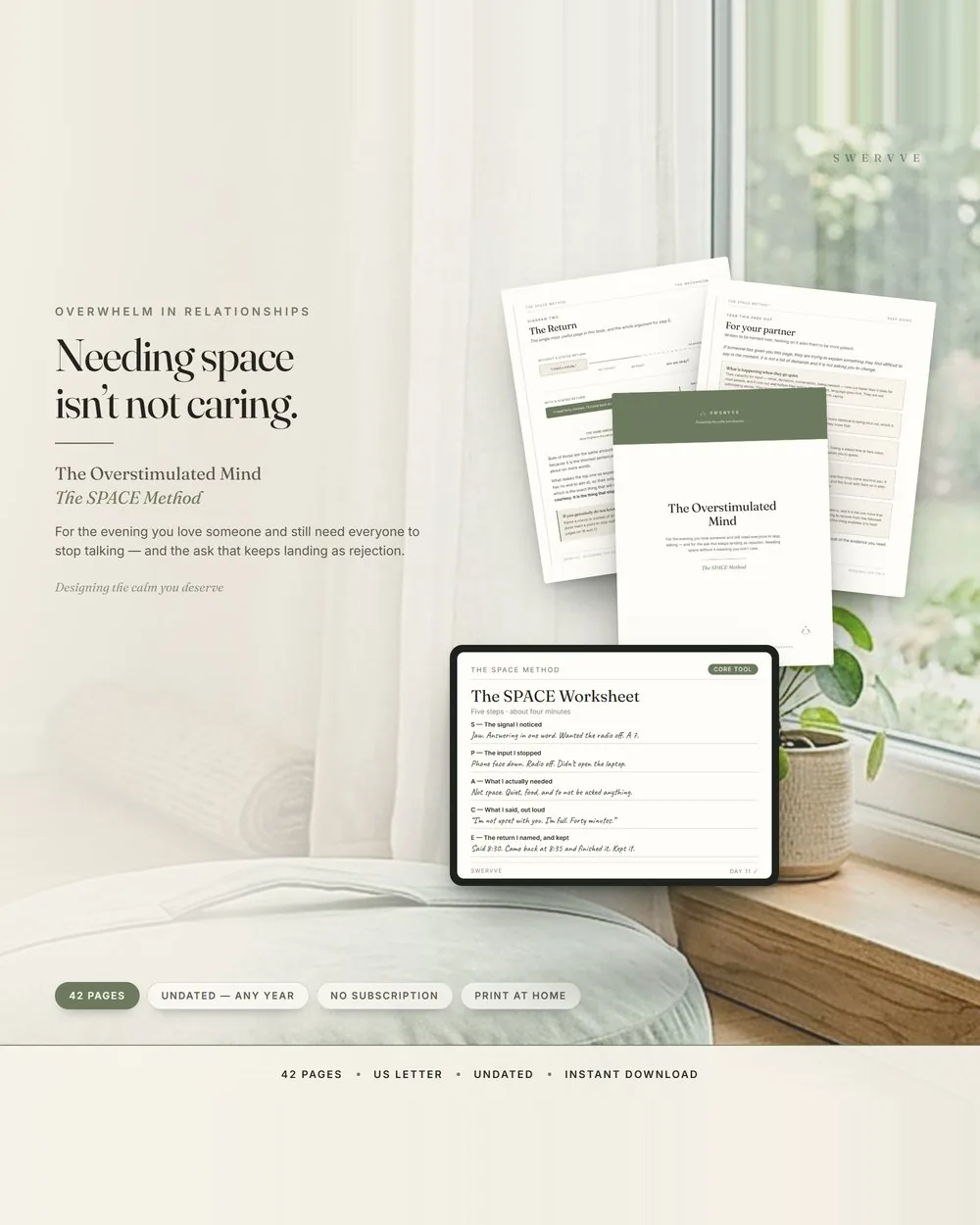
"I'm Not Mad, I'm Full" — Needing Space Without It Meaning You Don't Care
You love them and you still need everyone to stop talking. Here is why an ordinary question lands like a demand by seven o'clock — and the one thing that turns needing space from a fight into a non-event.
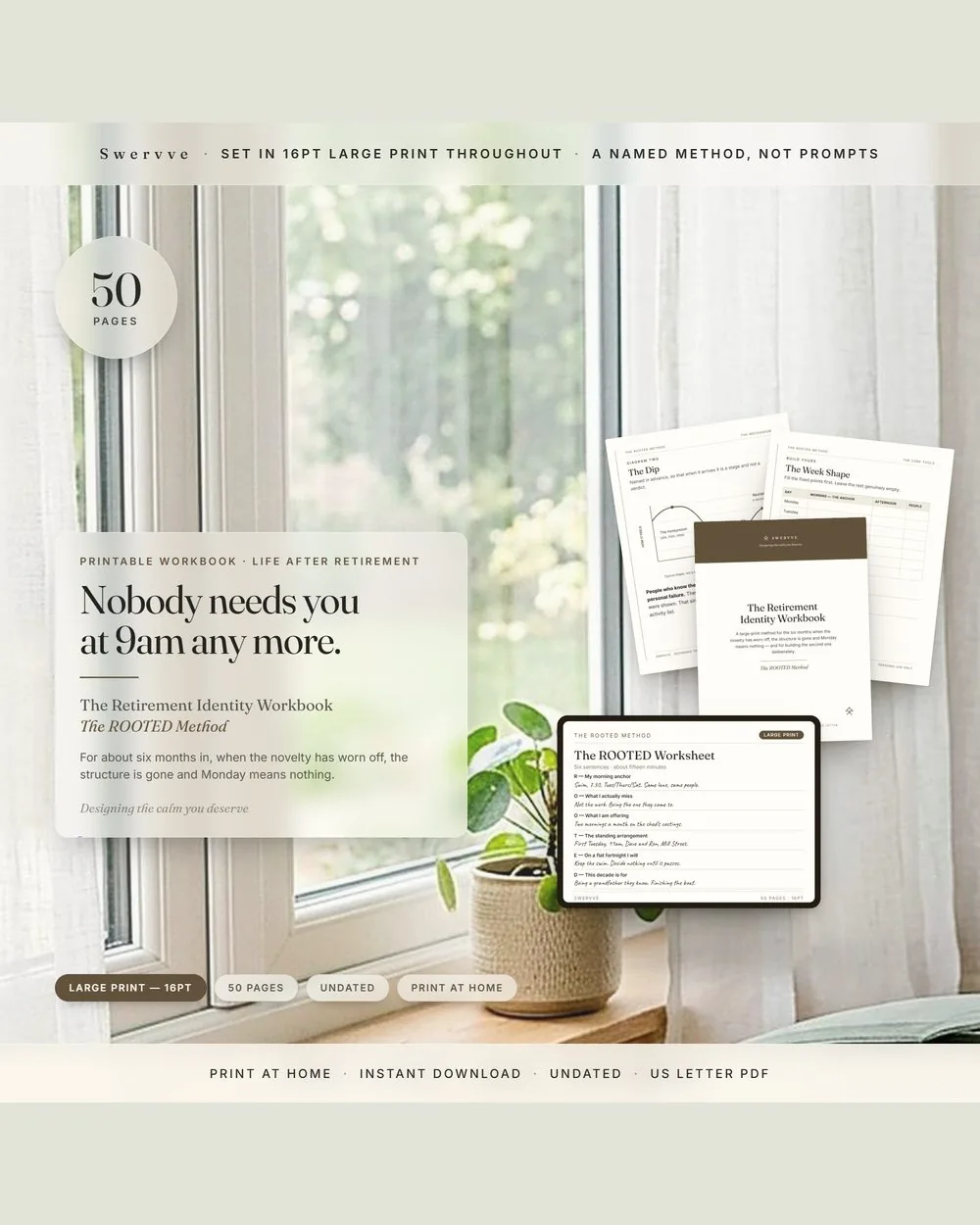
Nobody Needs You at 9am Any More — The Part of Retirement Nobody Warns You About
The leaving do was fine. So were the first three months. Then the list runs out and Monday means nothing. Why the six-to-twelve-month dip happens, why it gets mistaken for regret, and how to build the second identity on purpose.
Why Anxious Attachment Feels Like an Emergency (And How to Anchor)
An unread text shouldn't trigger an adrenaline spike, but with anxious attachment, it does. Here is the neurobiology of relational panic — and how to anchor yourself before protesting.